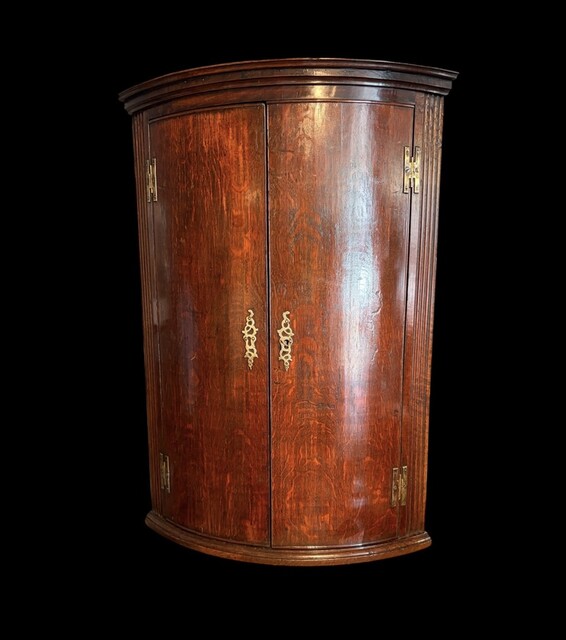
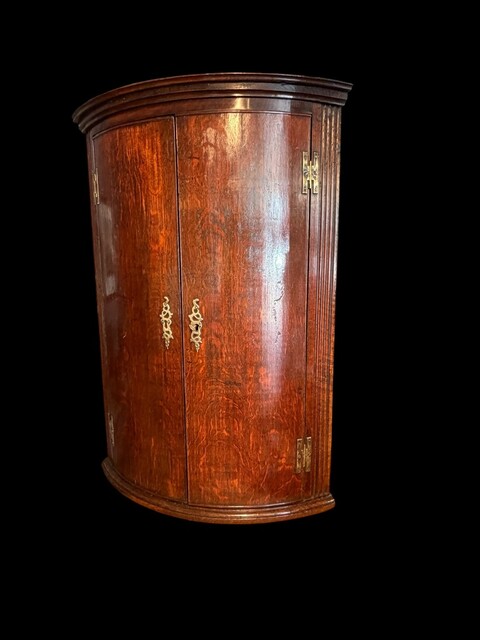
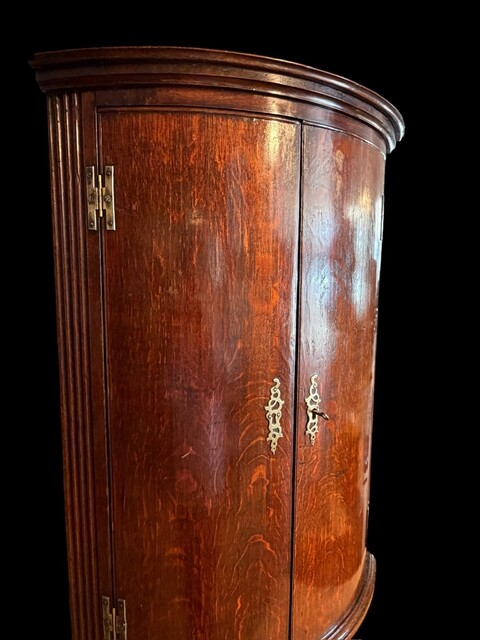
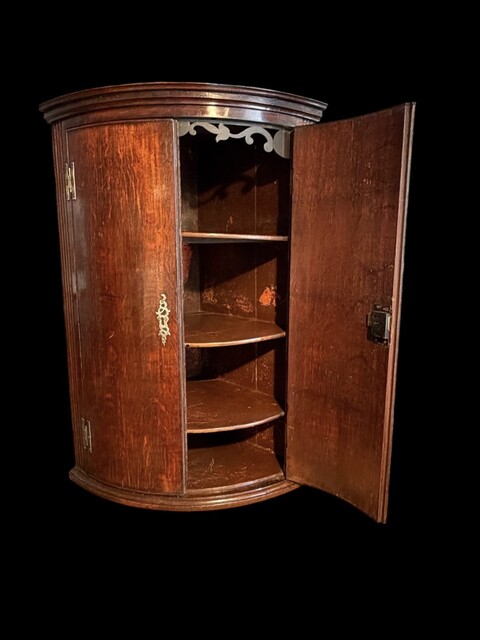
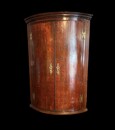
• A fine Welsh oak hanging corner cupboard from the 18th century, with beautifully figured oak, elegant proportions, a shaped cornice and a rich original patina.
  • A fine Welsh oak hanging corner cupboard from the 18th century, with beautifully figured oak, elegant proportions, a shaped cornice and a rich original patina.
  • A fine Welsh oak hanging corner cupboard from the 18th century, with beautifully figured oak, elegant proportions, a shaped cornice and a rich original patina.
  • A fine Welsh oak hanging corner cupboard from the 18th century, with beautifully figured oak, elegant proportions, a shaped cornice and a rich original patina.
A fine Welsh oak hanging corner cupboard from the 18th century, with beautifully figured oak, elegant proportions, a shaped cornice and a rich original patina.


A fine Welsh oak hanging corner cupboard dating from the 18th century, beautifully made with elegant proportions and a wonderfully mellow original patina. The cupboard features a gracefully bowed front enclosed by a pair of panelled doors, framed between finely fluted corner pilasters and surmounted by a moulded cornice. The interior retains three shaped shelves beneath a decorative pierced frieze, providing practical storage while preserving the lightness of the design. Crafted in beautifully figured oak, the cabinet displays an exceptionally rich colour and a deep, honest patina acquired over more than two centuries. The restrained elegance of the mouldings and the harmonious proportions are characteristic of the best Welsh country furniture of the period. A beautiful 18th century Welsh hanging corner cupboard, combining simplicity, craftsmanship and timeless appeal. It is an attractive and highly decorative piece that works equally well in a traditional interior or as a warm contrast within a more contemporary setting.  

Request for more information
See more items of this dealer
Print
Delobelle
Address:
Doorniksesteenweg 87 ,
8580 Avelgem
Region: Brugge
Country: Belgium
Tel.: +32 (0)56 644956
E-mail: info@delobelle-antiques.be
Website: www.delobelle-antiques.be
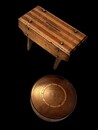
An Antique Scottish Treen Money Box and an Antique English Cedar and Boxwood Inlaid Pigs in Clover Game Ca 1830

An Antique Scottish Treen Money Box and an Antique English Cedar and Boxwood Inlaid Pigs in Clover Game Ca 1830

An attractive collection comprising an antique Scottish treen money box in the form of a miniature stool together with an antique English cedar and boxwood inlaid circular box enclosing the popular Victorian game Pigs in Clover, dating from around the mid 19th century. Both pieces beautifully reflect the quality of traditional British craftsmanship and retain a wonderful warm colour and original patina.

The Scottish money box is finely made, probably in sycamore with contrasting hardwood bands, and retains its original brass carrying handle. The English game box is crafted in cedar with a delicate boxwood inlaid border and still contains the original wooden maze together with its glass marbles. Pigs in Clover was one of the most popular Victorian dexterity games, challenging players to guide the marbles through the circular labyrinth into the central enclosure by carefully tilting the box.

Two charming and highly decorative antique treen objects, each with its own character and history, offering both decorative appeal and genuine collector's interest. A beautiful addition to any collection of English and Scottish treen, antique games or country furniture.


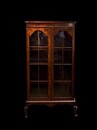
An Antique English Edwardian Burr Walnut Glazed Bookcase

An Antique English Edwardian Burr Walnut Glazed Bookcase

An antique English Edwardian burr walnut glazed bookcase of elegant proportions, raised on graceful cabriole legs and fitted with a pair of glazed doors enclosing adjustable shelves. The cabinet is veneered in beautifully figured burr walnut, displaying a rich colour, wonderful grain and a warm original patina.

The shaped glazed doors give the bookcase a refined architectural appearance, while the well balanced proportions and restrained Edwardian design make it both elegant and highly versatile. Perfect for displaying books, porcelain, silver or a carefully curated collection, this beautiful cabinet will complement both period and contemporary interiors. A fine example of English Edwardian craftsmanship with timeless appeal.


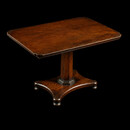
An English early 19th century apprentice mahogany tilt top table with an octagonal pedestal, platform base and rich original patina. A finely made miniature cabinetmaker's apprentice piece.

An English early 19th century apprentice mahogany tilt top table with an octagonal pedestal, platform base and rich original patina. A finely made miniature cabinetmaker's apprentice piece.

An early 19th century apprentice mahogany tilt top table of exceptional quality, faithfully reproducing the proportions and construction of a full sized George III example.

The rectangular top retains its original tilt mechanism, allowing it to be displayed either horizontally or upright, exactly as intended on the original design. It is supported by a finely shaped octagonal pedestal, standing on an elegant platform base with rounded corners and bun feet. Every element has been carefully executed, demonstrating the skill and precision expected from a cabinetmaker's apprentice piece.

The beautifully figured mahogany displays a deep, warm colour and a rich untouched patina that has developed naturally over more than two centuries. The elegant proportions, restrained design and excellent craftsmanship give this miniature table remarkable presence despite its modest size.

Apprentice pieces were produced by young cabinetmakers as demonstrations of their technical ability and often reproduce full sized furniture in every constructional detail. Fine examples such as this are increasingly sought after for their craftsmanship, historical significance and decorative appeal.

A beautiful early 19th century apprentice mahogany tilt top table, retaining its original tilt mechanism, outstanding proportions and an exceptional original patina.


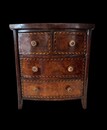
An early 19th century apprentice chest of drawers in mahogany with burr walnut veneered drawer fronts, ebony and satinwood stringing, decorative crossbanding and turned brass handles.

An early 19th century apprentice chest of drawers in mahogany with burr walnut veneered drawer fronts, ebony and satinwood stringing, decorative crossbanding and turned brass handles.

The miniature chest features an arrangement of two short drawers above two long graduated drawers, all veneered in beautifully figured burr walnut. Each drawer is framed by fine ebony and satinwood stringing and finished with striking crossbanded borders, demonstrating the precision expected from a cabinetmaker's apprentice piece. The chest retains its original turned bone handles, which provide a refined contrast against the rich colour of the veneers.

The gently overhanging top is veneered in burr walnut, while the solid mahogany sides and stiles display a deep, warm patina acquired over two centuries. The subtle shaping of the front and the harmonious proportions reflect the influence of the Regency period and illustrate the high standard of craftsmanship invested in these miniature masterpieces.

Apprentice pieces were produced by young cabinetmakers to demonstrate their technical ability before completing their training. Today they are admired not only for their historical significance but also for their remarkable quality and decorative appeal.

A beautiful and highly decorative early 19th century apprentice chest of drawers, combining fine burr walnut veneers, delicate stringing, elegant crossbanding and an exceptional original patina.


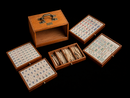
An early 20th century Chinese Mahjong set housed in its original hardwood carrying case, complete with hand engraved bone and bamboo tiles, five removable drawers and original scoring sticks.

An early 20th century Chinese Mahjong set housed in its original hardwood carrying case, complete with hand engraved bone and bamboo tiles, five removable drawers and original scoring sticks.

An early 20th century Chinese Mahjong set, dating from around 1910, housed in its original hardwood carrying case with a brass carrying handle and engraved brass fittings.

The sliding front panel reveals five removable drawers containing a complete set of finely hand engraved bone and bamboo tiles, together with the original scoring sticks and accessories. Each tile is carefully engraved and hand coloured in red, green and black pigments, demonstrating the quality and craftsmanship associated with the finest early export Mahjong sets.

Mahjong originated in China during the nineteenth century and rapidly gained popularity throughout Europe and America during the first decades of the twentieth century. Export sets such as this were admired not only for the game itself but also for the quality of their manufacture and their beautifully organised presentation.

The warm colour and attractive grain of the hardwood case are complemented by its original brass carrying handle and engraved fittings, while the five fitted drawers provide both practical storage and an elegant display of the beautifully crafted tiles.


A fine Welsh oak hanging corner cupboard from the 18th century, with beautifully figured oak, elegant proportions, a shaped cornice and a rich original patina.

A fine Welsh oak hanging corner cupboard from the 18th century, with beautifully figured oak, elegant proportions, a shaped cornice and a rich original patina.

A fine Welsh oak hanging corner cupboard dating from the 18th century, beautifully made with elegant proportions and a wonderfully mellow original patina.

The cupboard features a gracefully bowed front enclosed by a pair of panelled doors, framed between finely fluted corner pilasters and surmounted by a moulded cornice. The interior retains three shaped shelves beneath a decorative pierced frieze, providing practical storage while preserving the lightness of the design.

Crafted in beautifully figured oak, the cabinet displays an exceptionally rich colour and a deep, honest patina acquired over more than two centuries. The restrained elegance of the mouldings and the harmonious proportions are characteristic of the best Welsh country furniture of the period.

A beautiful 18th century Welsh hanging corner cupboard, combining simplicity, craftsmanship and timeless appeal. It is an attractive and highly decorative piece that works equally well in a traditional interior or as a warm contrast within a more contemporary setting.


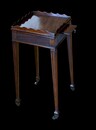
A fine George III mahogany kettle stand, circa 1810, with a shaped gallery, reeded frieze, pull out slide and brass castors.

A fine George III mahogany kettle stand, circa 1810, with a shaped gallery, reeded frieze, pull out slide and brass castors.

A fine George III mahogany kettle stand, dating from the early 19th century, retaining elegant proportions and a beautiful warm patina. The square top is enclosed by a finely shaped gallery above a crisply reeded frieze, all raised on slender reeded tapering legs terminating in the original brass castors.

The stand is fitted with a practical pull out slide, providing additional space for a teapot, tea caddy or serving tray. The restrained elegance of the design reflects the refined taste of the late George III period, where functionality was combined with understated decoration.

Beautifully crafted in solid mahogany, this kettle stand displays excellent colour, pleasing proportions and fine original detail throughout. An attractive and highly decorative piece of English furniture, equally suitable as a lamp table or occasional table in both traditional and contemporary interiors.


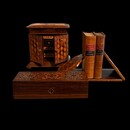
A collection of three fine 19th century English Tunbridge Ware pieces, comprising a cabinet, an extending bookcase and a glove box with exceptional mosaic marquetry.

A collection of three fine 19th century English Tunbridge Ware pieces, comprising a cabinet, an extending bookcase and a glove box with exceptional mosaic marquetry.

A beautiful collection of three fine 19th century English Tunbridge Ware pieces, comprising a cabinet, an extending bookcase and a glove box. Each piece is finely veneered in rosewood and decorated with exceptional mosaic marquetry, displaying the remarkable craftsmanship for which the workshops of Tunbridge Wells became renowned throughout the Victorian period.

The cabinet is richly ornamented with geometric cube work and delicate floral mosaic panels, enclosing a fitted interior with an arrangement of small drawers. The extending bookcase combines elegant proportions with practical design and refined decoration, while the glove box is embellished with beautifully executed geometric mosaic panels, demonstrating the extraordinary precision achieved by the Tunbridge craftsmen.

Together, these three pieces illustrate the diversity and refinement of English Tunbridge Ware. They retain excellent colour, crisp detail and a beautiful warm patina, making them an attractive and decorative group for both collectors and admirers of fine Victorian craftsmanship.


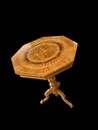
 A 19th century Sorrento marquetry occasional table with an octagonal top, exceptional geometric marquetry, probably depicting two songbirds on a flowering branch, Italy.

A 19th century Sorrento marquetry occasional table with an octagonal top, exceptional geometric marquetry, probably depicting two songbirds on a flowering branch, Italy.

A beautiful 19th century Sorrento occasional table of elegant proportions, featuring an octagonal top richly decorated with superb marquetry. The centre is adorned with what are probably two songbirds perched on a flowering branch, surrounded by an intricate arrangement of geometric borders and concentric decorative bands, all executed with remarkable precision.

The marquetry is composed of a variety of carefully selected veneers, including walnut, olivewood, maple, boxwood and other contrasting fruitwoods, creating a harmonious palette of warm golden and rich brown tones. The exceptional craftsmanship and refined geometric patterns are characteristic of the finest Sorrento production of the 19th century.

The table is raised on a beautifully turned pedestal, terminating in elegant shaped tripod legs, all enriched with matching marquetry decoration. Its compact size makes it an ideal occasional, lamp or side table while remaining a highly decorative statement piece.

A fine example of traditional Sorrento craftsmanship, combining outstanding marquetry, elegant proportions and excellent decorative appeal. The table retains a wonderful warm patina and is in very good antique condition.

Ik denk dat dit perfect aansluit bij het niveau van de rest van jullie website: zakelijk, correct, maar toch aantrekkelijk voor verzamelaars en interieurarchitecten.


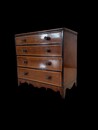
Early 19th century English apprentice piece chest of drawers in mahogany with satinwood stringing. A charming miniature of fine quality with beautiful original patina.

Early 19th century English apprentice piece chest of drawers in mahogany with satinwood stringing. A charming miniature of fine quality with beautiful original patina.

A delightful early 19th century English apprentice piece chest of drawers, beautifully crafted in richly coloured mahogany and elegantly decorated with fine satinwood stringing. Faithfully constructed as a miniature version of a full-sized chest, this charming piece perfectly demonstrates the skill and precision expected from a young cabinet maker during his apprenticeship.

The chest is fitted with four finely graduated drawers, retaining their original turned wooden knobs and displaying excellent proportions throughout. The delicate satinwood stringing provides an elegant contrast to the warm mahogany, while the shaped bracket-style apron adds further refinement to the design.

Displaying a beautiful mellow colour and an attractive original patina, this apprentice piece reflects the high standards of traditional English cabinet making. Both decorative and highly collectable, it is an excellent example of the craftsmanship and attention to detail that characterise fine apprentice work of the early nineteenth century.

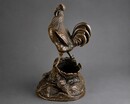
Fine 19th century French animalier bronze sculpture of a rooster by Jules Moigniez, featuring a fox and duck below. Rich original patina and exceptional detail.

Fine 19th century French animalier bronze sculpture of a rooster by Jules Moigniez, featuring a fox and duck below. Rich original patina and exceptional detail.

A superb 19th century French animalier bronze sculpture by the renowned sculptor Jules Moigniez (1835–1894), depicting a magnificent rooster standing proudly above a richly modelled naturalistic base. Signed "J. Moigniez", this impressive bronze perfectly illustrates the remarkable quality and realism for which the artist is internationally celebrated.

The rooster is modelled with extraordinary attention to detail, from the finely textured plumage to the elegantly sweeping tail feathers and alert stance. Beneath, a beautifully sculpted fox and duck emerge from the woodland setting, creating a lively and dramatic composition inspired by nature. Every element has been executed with exceptional precision, giving the sculpture depth, movement and character.

The central tree stump is ingeniously formed as a concealed vessel, seamlessly incorporated into the composition without distracting from its sculptural quality. This unusual feature enhances both the originality and decorative appeal of the piece.

Finished in a rich, dark brown patina with beautifully highlighted high points, the sculpture displays outstanding depth and warmth. A magnificent example of nineteenth-century French animalier sculpture, combining artistic excellence with exceptional craftsmanship, and an important addition to any collection of fine bronze sculpture.


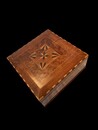
Fine 19th century English mahogany box with an exquisite geometric marquetry panel, crossbanded decoration and a fitted interior. Beautiful original colour and patina.

Fine 19th century English mahogany box with an exquisite geometric marquetry panel, crossbanded decoration and a fitted interior. Beautiful original colour and patina.

A fine 19th century English mahogany box of exceptional quality, beautifully veneered throughout and distinguished by an exquisite geometric marquetry panel to the lid. Executed in a carefully selected combination of contrasting timbers, the marquetry displays a striking star motif framed by elegant line inlays and a finely crossbanded border, demonstrating the high level of craftsmanship associated with English cabinet making of the period.

The sides are veneered in beautifully figured mahogany, their rich grain and warm colour complementing the decorative lid and creating a harmonious appearance from every angle. Delicate crossbanding to the edges further enhances the refined character of the piece.

Opening the lid reveals a neatly fitted interior lined in green fabric and divided into practical compartments, making the box ideal for jewellery, correspondence, treasured possessions or collectors' pieces. The interior is both elegant and functional, reflecting the same attention to detail found throughout the exterior.

Displaying a superb original patina and beautifully preserved veneers, this elegant English box combines decorative appeal with outstanding craftsmanship. A refined and highly decorative example of 19th century English cabinet making, it would make a distinguished addition to any collection or interior.